


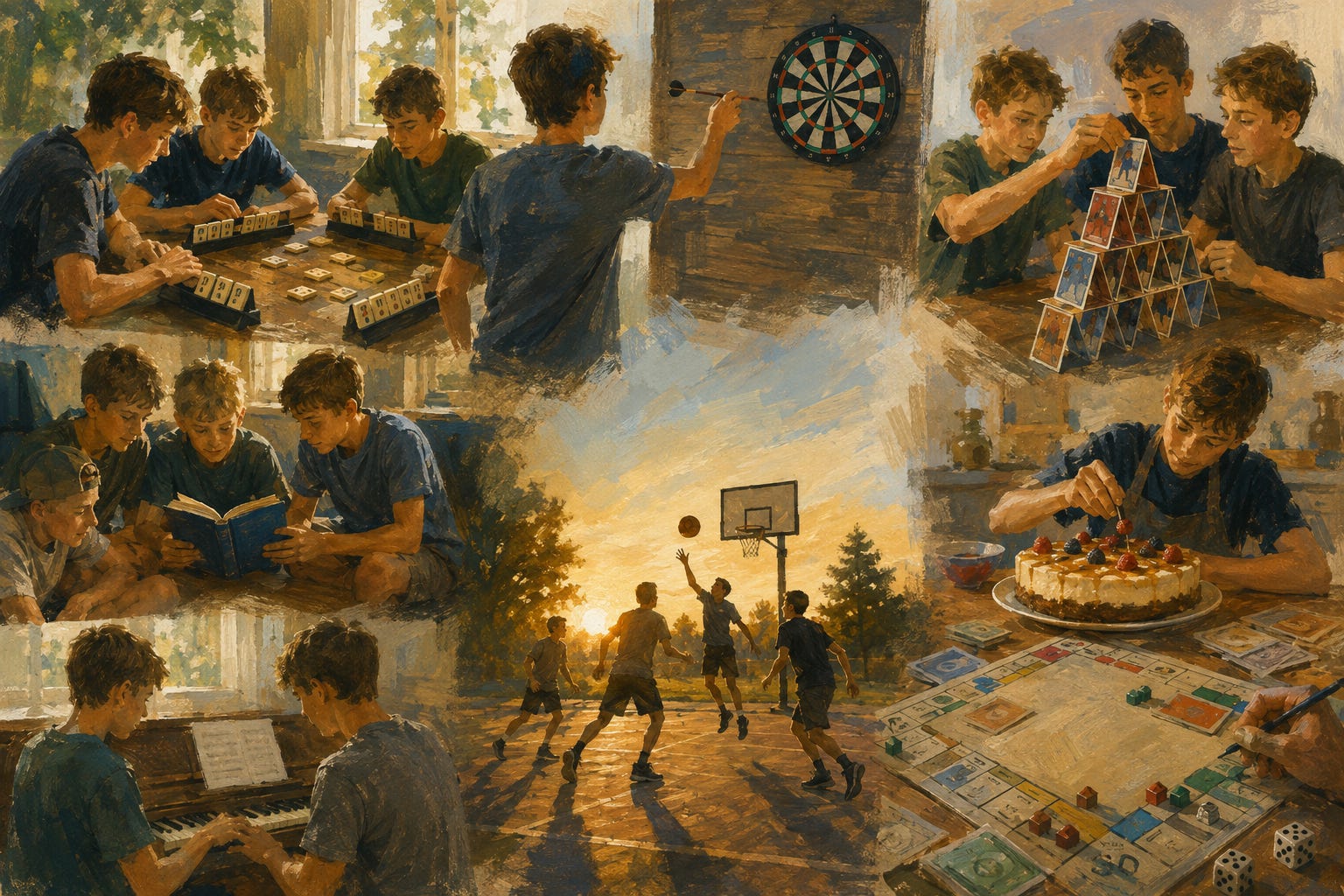
It’s been three weeks since we started an experiment as a family: a screen-entertainment-free rest of the summer. Although I anticipated we’d learn some cool things along the way, I’ve honestly been shocked by the activities that have “come out of the woodwork”—things that had been more or less dormant, almost extinct, in recent years.
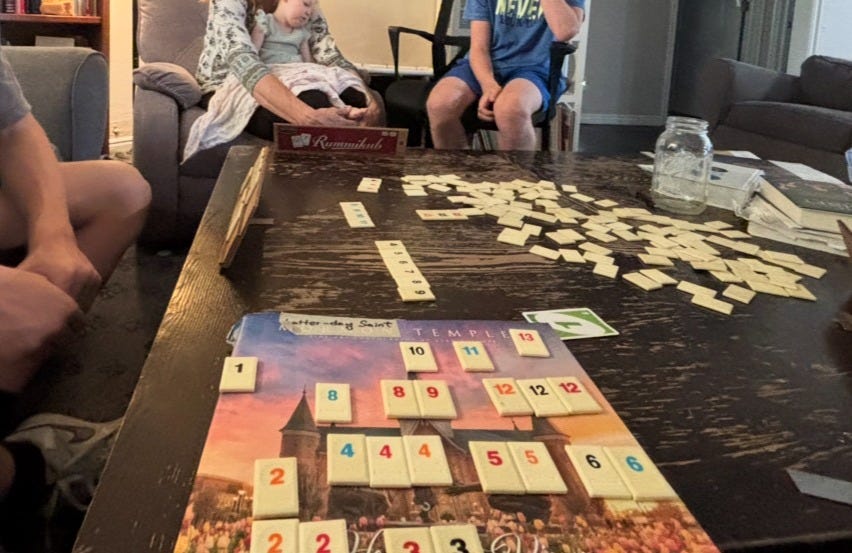
That first night, for instance, we started playing Rummikub for the first time in years. Then we played again the next night—and every night the following week—until we had a running, ferocious competition.
Later that week, the boys ended up playing darts and asked Dad if he would join their tournament. We had a blast together.
After the first week of the experiment, I told Monique that it had been one of the sweetest, most enjoyable weeks I can remember in our home.
It has been fascinating to see the kinds of activities that began to re-emerge after being nearly extinct—completely unplanned and without any specific input or direction from Mom or Dad. For instance:
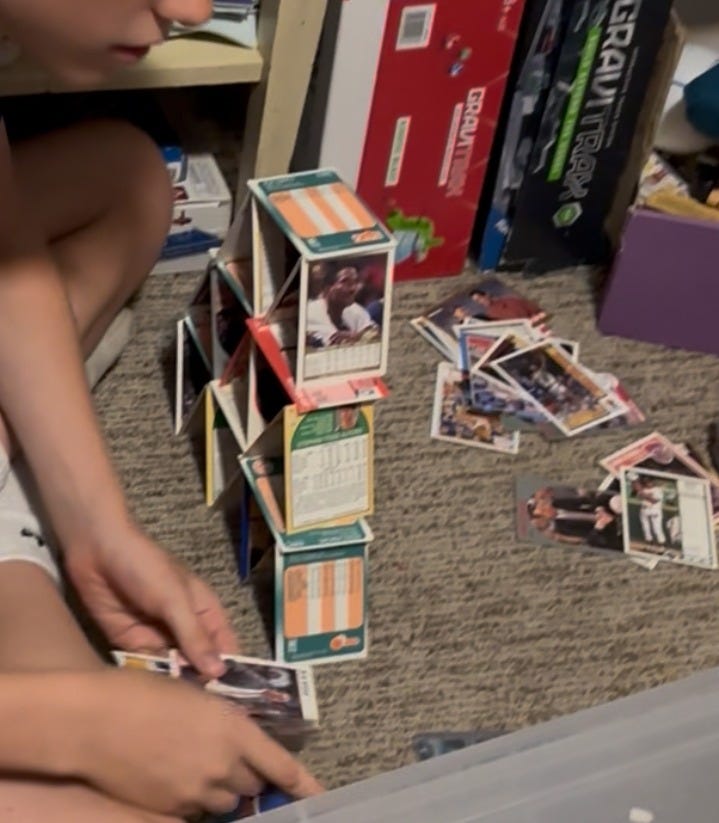
My three youngest sons decided to see who could build the biggest house of cards using some of their old basketball cards.
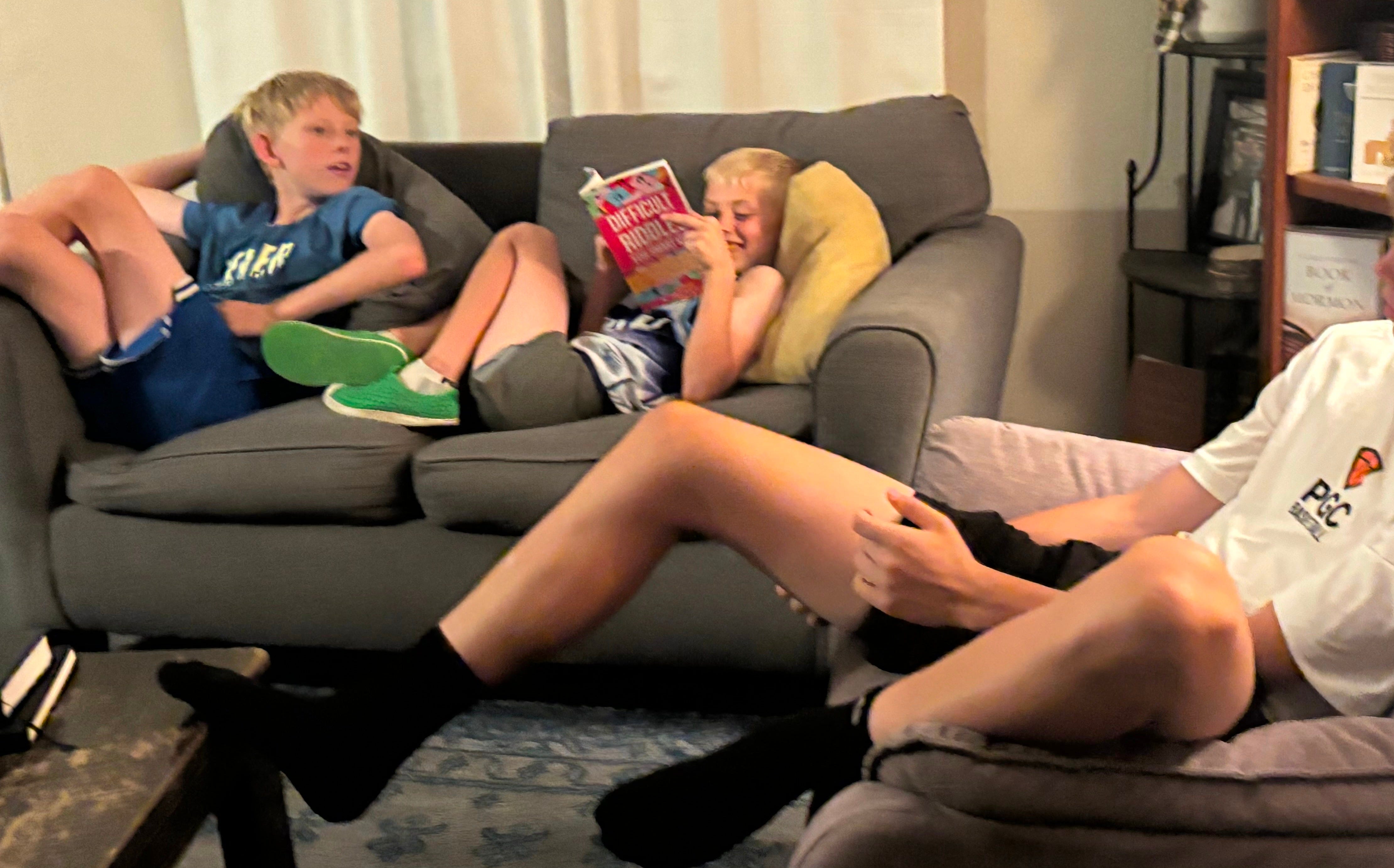
My youngest son found a riddle book around the house, and the boys gathered around listening as he posed one riddle after another.
Joseph started making creative new desserts for the family, including one recipe he spotted on a display at the grocery store.
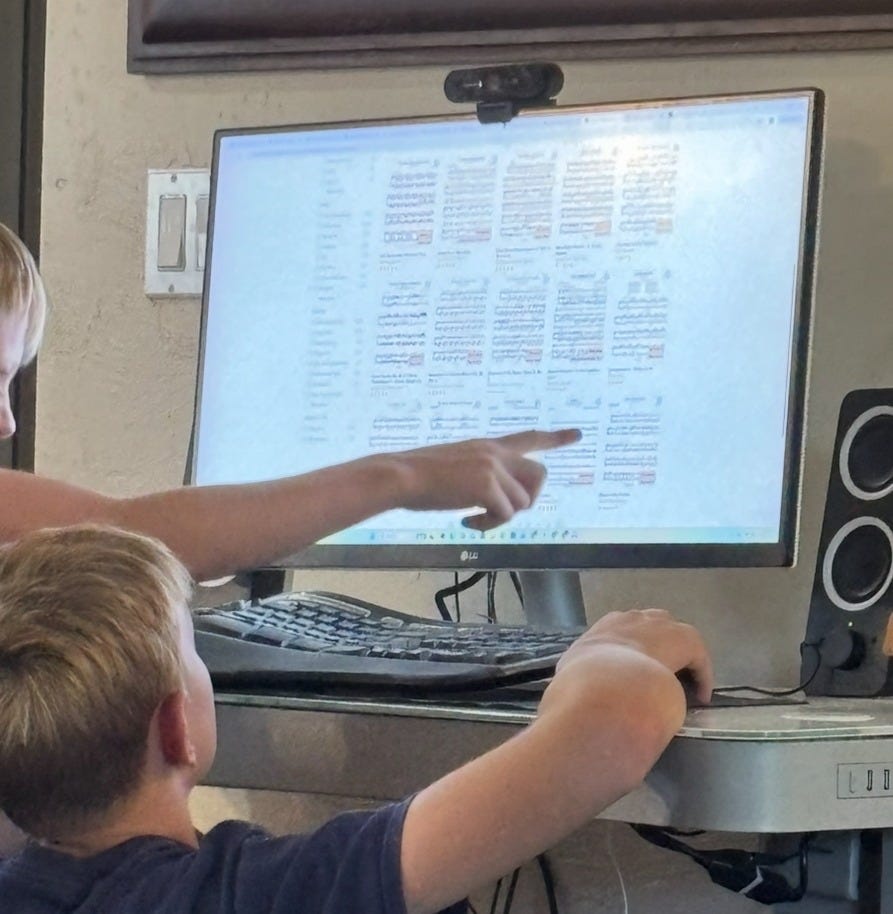
We still used screens for educational purposes, like getting updated on all the reasons Lebron chose the 76’ers (!!) and the boys reaching their 900-day Duolingo streak. One night, two of my sons spontaneously decided it would be fun to learn some popular songs on the piano. So, they looked up sheet music online and spent the evening running back and forth between the computer and the piano, practicing their favorites.
Running the numbers
During the summer, children’s average recreational screen time typically increases by about 45–55 minutes per weekday—working out to roughly 3.5–4.5 hours per day, compared with 2.5–3.5 hours during the school year. Teenagers typically spend even more daily time with screen-based entertainment.
Over a typical 10-week summer, this means:
A child will spend approximately 240–260 hours on recreational screen time.
An average teen will spend approximately 300–370 hours on recreational screen time.
That’s enough time to read roughly 30–70 chapter books, play 120–240 baseball or basketball games, practice a musical instrument or another skill long enough to become quite proficient, bike 2,500–3,700 miles, or enjoy 30–46 full eight-hour days hiking, camping, swimming, traveling, serving, or simply making memories with family and friends.
None of this means recreational screen time has no value. Much of it is enjoyable, and some of it is genuinely beneficial. But adding up those hours helps illustrate the scale of the opportunity. Across an entire year, an average child spends roughly 1,100 hours and an average teen about 1,500 hours using screens primarily for entertainment.
Withdrawal effects
I don’t want to paint a naïve picture here. This experiment hasn't always been easy. Resistance resurfaced a few times when they missed their usual media.
One of my sons (the last to agree to the experiment) said, “This is why I didn’t want this!” He added, “I did feel a little forced into this” (we wanted to do it all together, and wouldn’t start if he didn’t join).
On other days, I found myself feeling some regret too. There were moments when it would have been nice to just watch something so I could take my mind off the burdens of real life.
For instance, when Utah’s Pioneer Day came around, it got a little weird. We all had the same thought: Uh-oh... this is when we’d usually zone out even more. What are we going to do?
So we went to paint pottery instead. Then we came home and had a slumber party with sundaes.
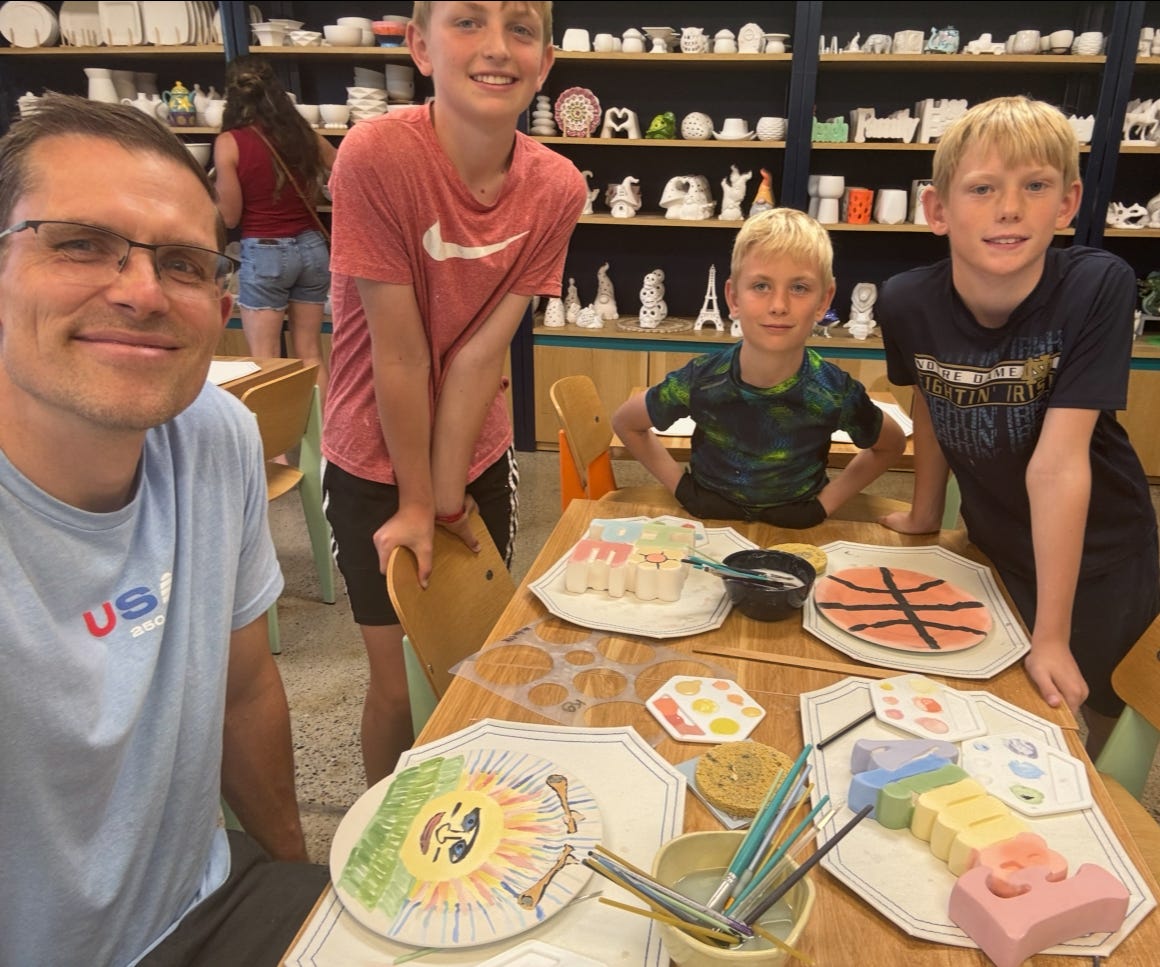
We’ve got a short-list of movies we’re looking forward to seeing together when the experiment ends (which conveniently coincides with when they'll only cost $3 to rent online)—especially The Mandalorian & Grogu and Michael (Jackson). And we’re going to formally celebrate the end of our summer challenge on my son’s birthday at the end of August, when he wants to see the new Spiderman.
But the nice thing is there’s a specific thing we’ve heard about and want to watch, which feels different than the … “can we watch something, Mom” question that has consumed so many “free” afternoons and evenings before.
More fun, not less
Overall, though, one outcome is clear so far at the halfway point: this experiment seems to have generated more fun, not less. I’ll have to do a little “post-survey” at the end.
But for now, it’s been fascinating to see the shifts in our home: activities that have quietly disappeared over the years suddenly reappeared, as if they'd been waiting patiently for enough attention to return. Also:
We’ve played basketball even more than usual and have read together as a family more than normal.
My oldest son finished an online class, and I’ve watched my two oldest sons read more than I remember.
Monique organized a trip to Willard Bay, and I’ve organized a neighborhood softball game.
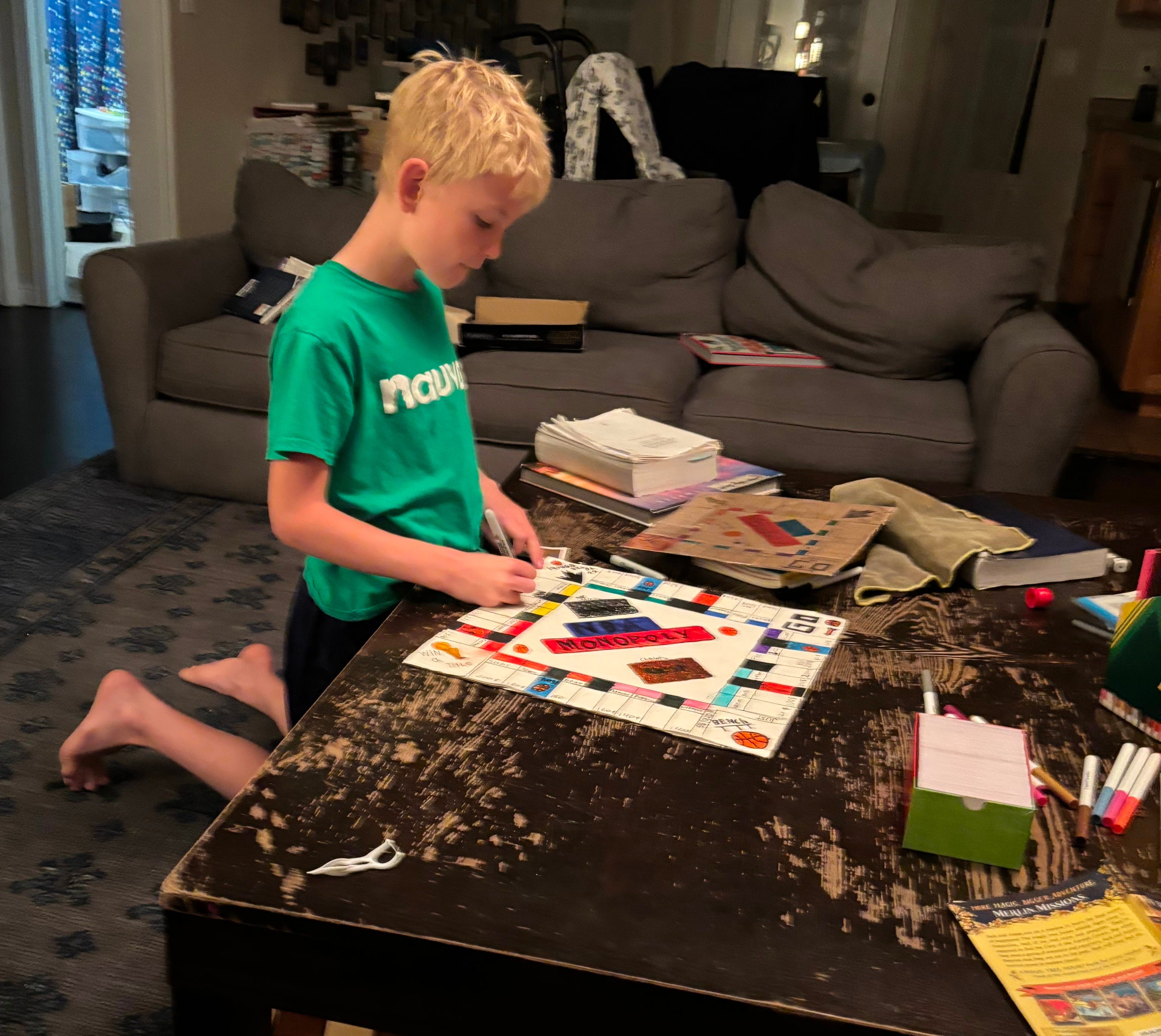
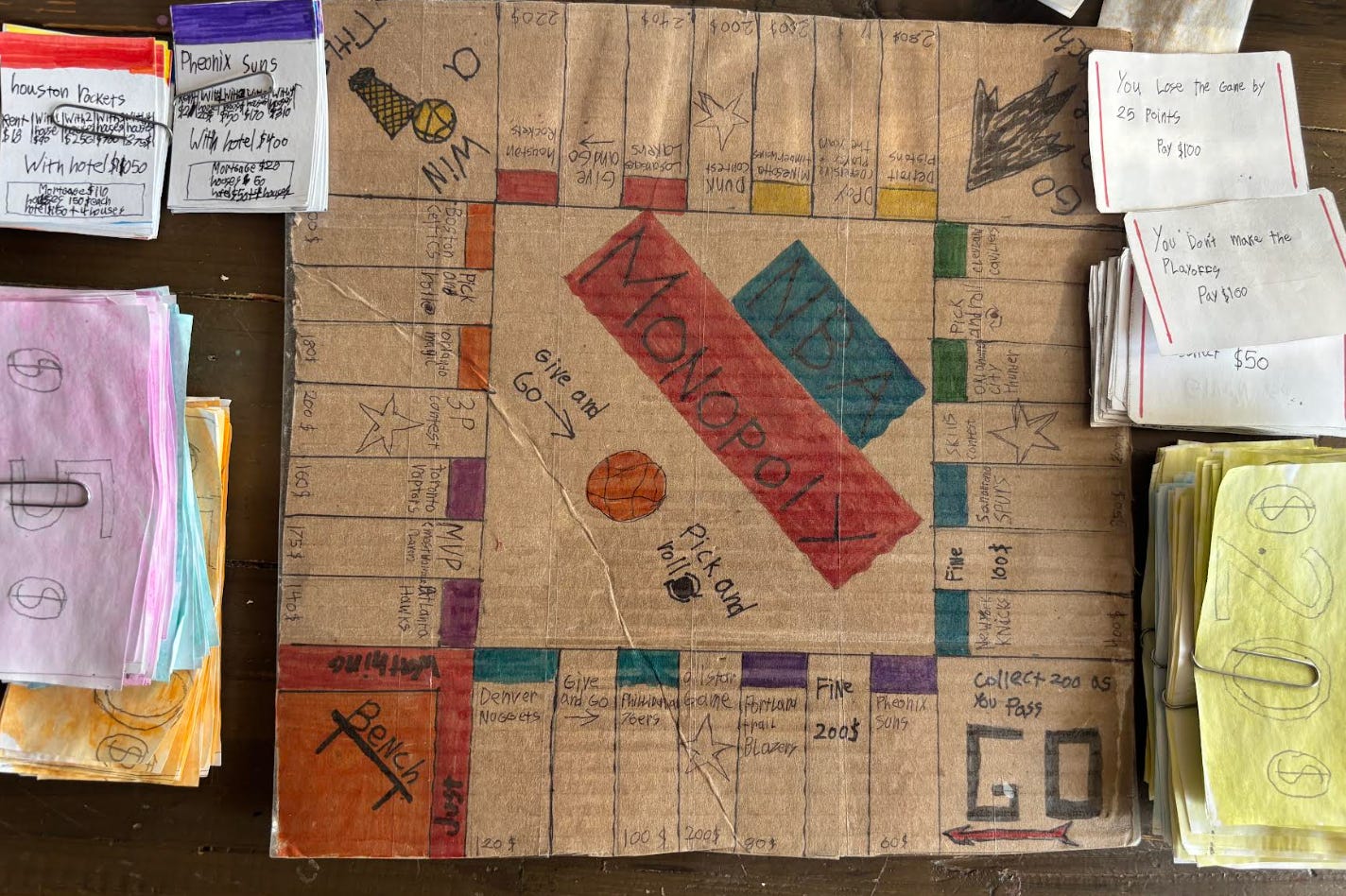
This past week, my three youngest boys started making homemade versions of Monopoly such as “NBA Monopoly,” complete with their own money, cards, and game boards. Across multiple days, it’s been so fun to see them spending many hours pouring focused time into customized game boards that we’re excited to play soon.
“I love it,” Monique told me. She especially likes not being constantly pressured about “when do I get to have my media time?!”
It’s like we’ve watched an entire ecosystem of forgotten family life begin to re-emerge—games, creativity, conversations, competitions, music, reading, and spontaneous adventures that had slowly been crowded out without us even noticing.
What about your own home?
Theoretically, I know any or all of this could happen in our home—or yours—even while an unchecked flow of digital entertainment continues. But practically, I think we all know that’s not very likely. We simply don’t have enough time and attention to do both.
The good news is that a “revival” doesn’t seem to take all that long. We started to see a flowering in just a few days…and new layers keep being added.
Who knows what we’ll decide for the rest of the school year. We’re trying to make decisions together, through a “family council” like we’ve been encouraged to try in our faith.
There are still a few weeks left in the summer. Are there experiences like this waiting to be rediscovered in your own home?
Whether or not you have children at home, this is something you could try yourself—even if only for a few days or a week. It could also be an experiment at any time of year. Summer is just one option.
Do you even know what might happen in your life, your relationships, or your home if you temporarily removed recreational screen entertainment?
Might be worth a try.
Note: I asked my boys’ permission for the use of any photos that include their face—trying to keep most images more general. I try to be sensitive about their privacy. “I don’t care,” Joseph told me. “Maybe I’ll become famous.” (:
UPDATE: On the day I posted this article, the boys proposed having a “bakeoff” - with three of them making different desserts based on recipes they looked up.
Joseph has started making his own cookbook with recipes he’s tried and wants to remember.
For two days, we watched them sitting them around and reading different facts about animals, countries, the human body….
The last two days, Joseph has asked if we could “go on a walk” … I was dumbfounded, “what did you say?”