


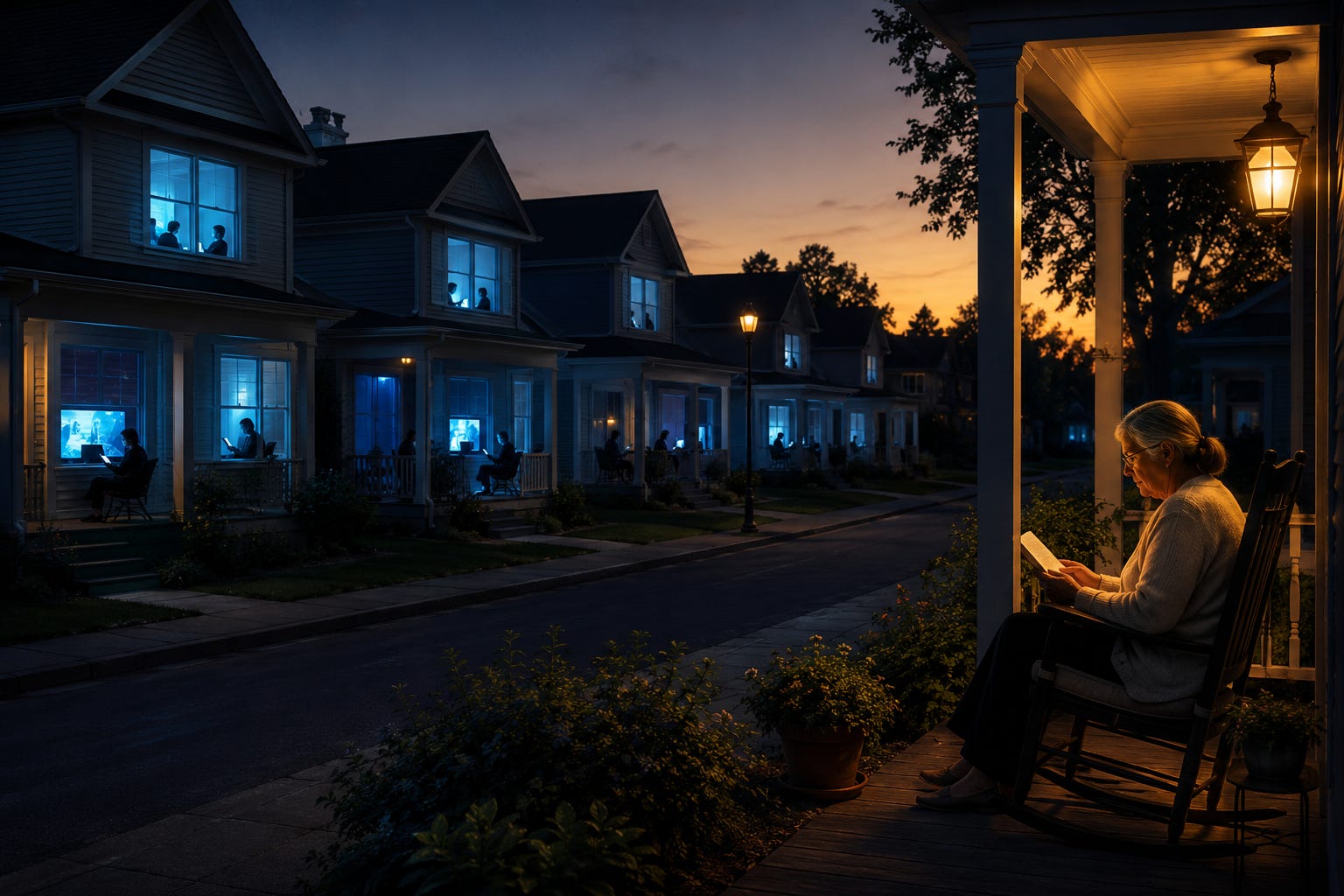
I can’t stop thinking about reading. Partly because every time I drive down the street, my neighbor Pam Budge is sitting on her porch reading another great book. And partly because I rarely find anyone else doing the same.
Meanwhile, we’re all fretting about a trembling democracy, fragmenting communities, disintegrating families, a crisis of attention in young people and accelerating cognitive decline in the rest of us.
Clearly, there’s no one solitary contributor to all this destabilization, but that doesn’t mean there aren’t some broad patterns to take very seriously.
The screen takeover continues
Ever since the 1960s, when 90% of American families owned a television, scholars like Harvard’s Robert Putnam (“Bowling Alone”) have been measuring signs of worsening community fragmentation.
Now, screens have conquered even more territory—colonizing every pocket, purse and hand. By 2015, roughly two-thirds of American adults owned a smartphone—with the last decade being an entirely new experiment in what it means when our lives are interrupted by a screen-check roughly once every 5 minutes (at least 100 times a day, or more)—including within 10 minutes of waking up for 85% of people.
During this time, lots of attention has gone to what our screen-mediated lives mean—with special attention given to the alarming impact of social media on young people, in particular.
The ‘end of reading’?
Lost in all this has been an enormous casualty: the slow and tragic death of reading.
I’m not trying to be dramatic here. I’m trying to be real. Check out the stats I review in my Deseret News commentary published this weekend—then, tell me I’m overreacting?
If you still think this is too much hand-wringing about “understandable evolutions sparked by the next phase of technology development” then please read this longer masterpiece by Rose Horowitch in the Atlantic: “The End of Reading is Here” (there’s also an audio version you can listen to).
My own focus has been considering the spiritual consequences of collapsing reading rates. “If the written word can spark encounters with sacred realities, what happens when we lose the ability and interest to read anything deeply?”
Here’s a key paragraph from near the end:
If short-form videos have trained the brain to expect a dopamine hit every few seconds, should it surprise anyone if the quiet of prayer and the black-and-white pages of scripture come to feel largely inaccessible and “boring,” despite their promise of opening a communion with the living God?
‘I’m done ceding my brain’
None of this means you and I should be resigned to these relentless, insurgent cultural forces—“well, kids today just don’t like to read … and I can’t even finish a book myself. Oh well.”
No way! In a 2026 New York Times commentary, Georgetown scientist Cal Newport wrote, “I’m done ceding my brain—the core of all that makes me who I am—to the financial interests of a small number of technology billionaires or the shortsighted conveniences of hyperactive communication styles.”
“It’s time to move past fretting about our slide into the cognitive shallows,” he continued, “and decide to actually do something about it.”
In my follow-up analysis, “Learning to read (again) as a way to reclaim and deepen faith,” I tried to summarize some of the best known ways to regain our capacity to read deeply.
Protecting precious time
I wanted to share more here about what our family is trying to do about all this. We’ve already had a reading hour at the end of the night for years now—one of our favorite hours of the day, when Monique and I take turns reading to each of the boys. More recently, Monique and I are finding some success at reading more together at night as well.
Ever since hearing Arthur Brooks’ caution about how phone-first mornings are “neurocognitively programming your brain for the whole day,” I’ve also been doubling down on my encouragement for our boys to make the first hour of the day also “screen-free.”
In a faith context, it was C.S. Lewis who taught years ago that the “real problem of the Christian life comes where people do not usually look for it. It comes the very moment you wake up each morning.” That’s when, he said, “All your wishes and hopes for the day rush at you like wild animals. And the first job each morning consists simply in shoving them all back; in listening to that other voice, taking that other point of view, letting that other larger, stronger, quieter life come flowing in.”
A summer retreat at home?
Although we’ve made some progress, we still find that, as a family, screen entertainment finds a way to intrude into the fabric of most days and moments—“can we watch something??”.... “please, just 5 more minutes of video games!” The one exception is Sunday, when we’ve done pretty well at taking a day-long break from our usual screen-related distractions.
But earlier this summer I was intrigued by writing from Clarissa Mull and Michaeleen Doucleff about the effect a summer distraction break—a “screen-free summer”—had on their families. With my son taking a summer class and my own need for screens in my writing, however, “screen-free” didn’t seem realistic for us.
It’s never been about screens or no screens, as far as the research is concerned. It’s about how we use screens. Even social media is connected with better outcomes when people use it for connection, rather than for passive scrolling.
The World Cup and NBA Finals were over, with the highlights we enjoyed in both. So last night, Monique and I proposed to our boys that we try a distraction-free last 6-weeks of the summer by taking a mental break from our usual screen entertainment.
For any online classes, Duolingo and other learning—as well as work, service and connection with others—screens were still great to use. And “this obviously wouldn’t be a forever thing either,” we clarified: “just an experiment, to try and see what happens.”
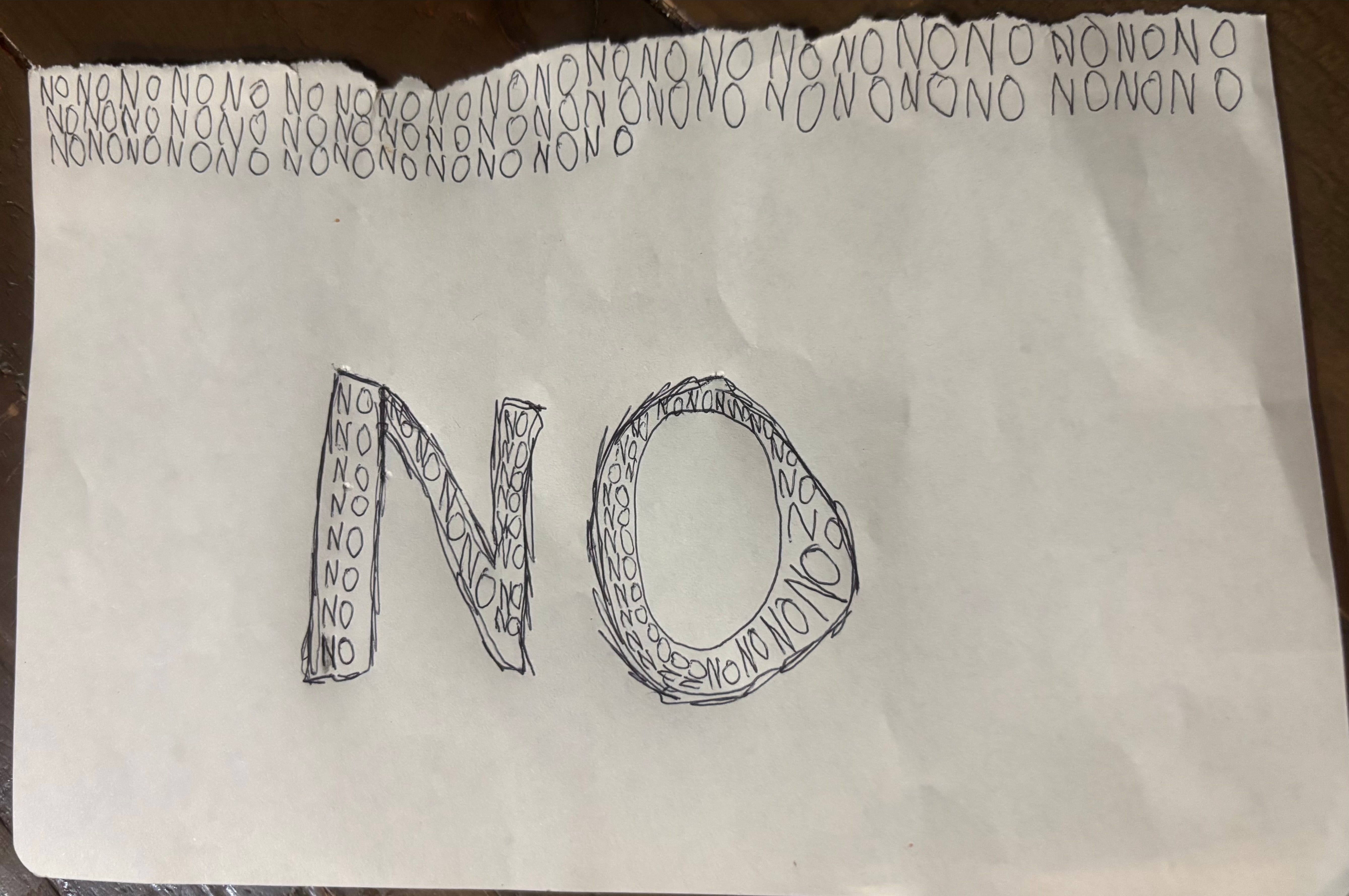
The first response was visceral—“No!!” blurted out my 11-year-old—who immediately began making what he called “protest” signs.
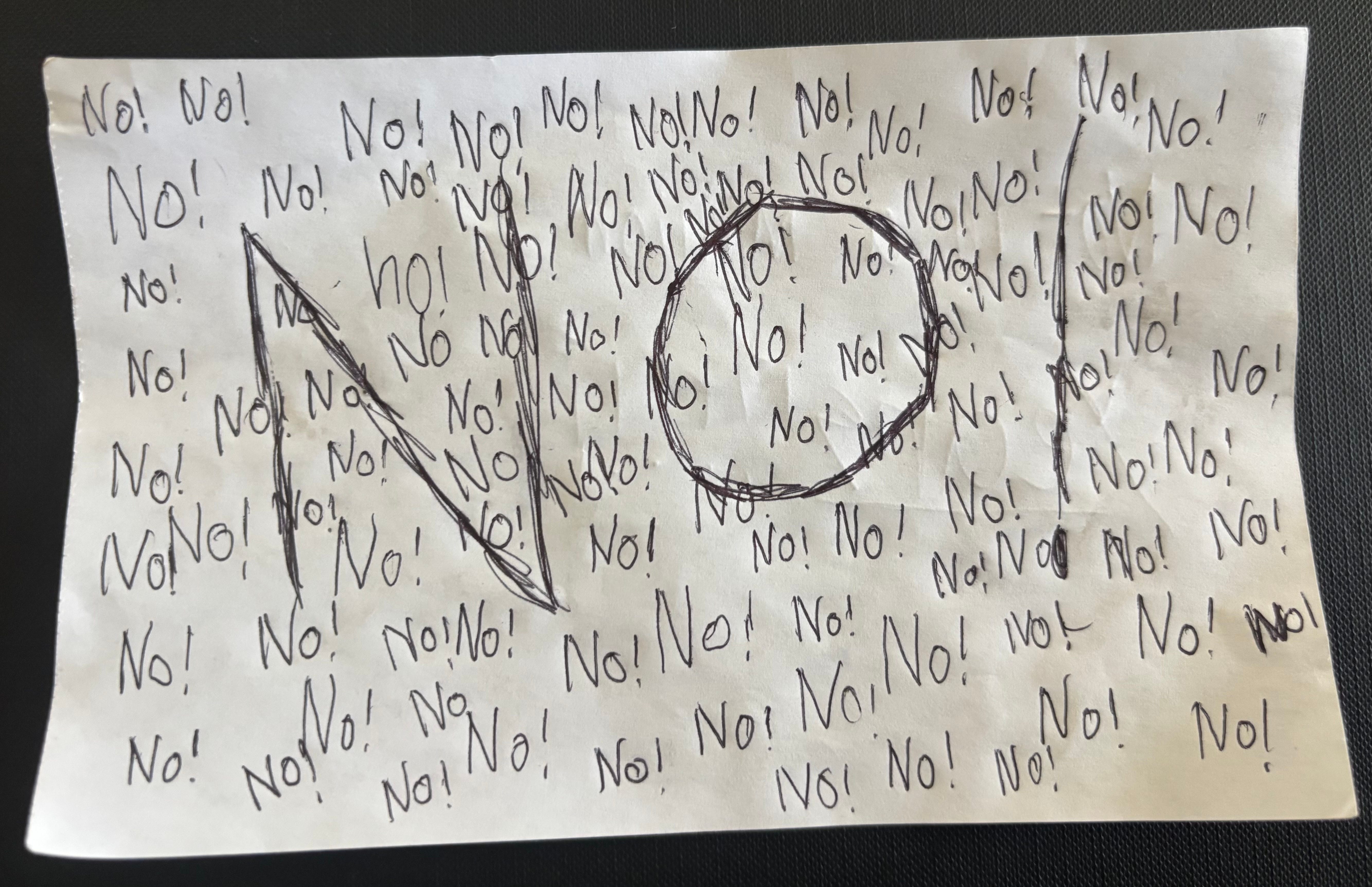
His little brother soon followed suit.
Then their wise mother weighed in, “What if God is trying to speak to us, but we can’t hear him?”
We watched part of a talk by President Russell Nelson from 2018 where this Latter-day Saint leader shared: “Oh, there is so much more that your Father in Heaven wants you to know.”
I’ve been sensing lately that there’s more God has in store for us too as a family, but we’re just not ready for it. “The world is too much with us,” my Mom used to read to us growing up.
“Getting and spending, we lay waste our powers”—so much so that the beauty around us “moves us not.”
“We have given our hearts away,” William Wordsworth underscores.
I’m tired of giving my heart away to things that don’t matter! I’m hungry for something more. To feel more peace, power, joy and love….all the good stuff.
As we told our boys, what if this sacrifice of Youtube shorts, Netflix, NBA highlights, social media scrolling, Ryan Trahan and video games, could give us enough space to actually hear God’s voice in our lives?
“So, what would be the reward?” they asked about this proposed summer plan. We’ll definitely have some kind of a fun celebration at the end, but the real reward is something way better than more ice cream or an amusement park. More of God’s peace, joy and love—which Nephi declared is “the most desirable above all things.”
Finally, one of our boys said “okay.” Then another said, “all right.” Then the youngest, who had created the second protest sign, crumpled it up dramatically, and declared, “I’ll do it!”
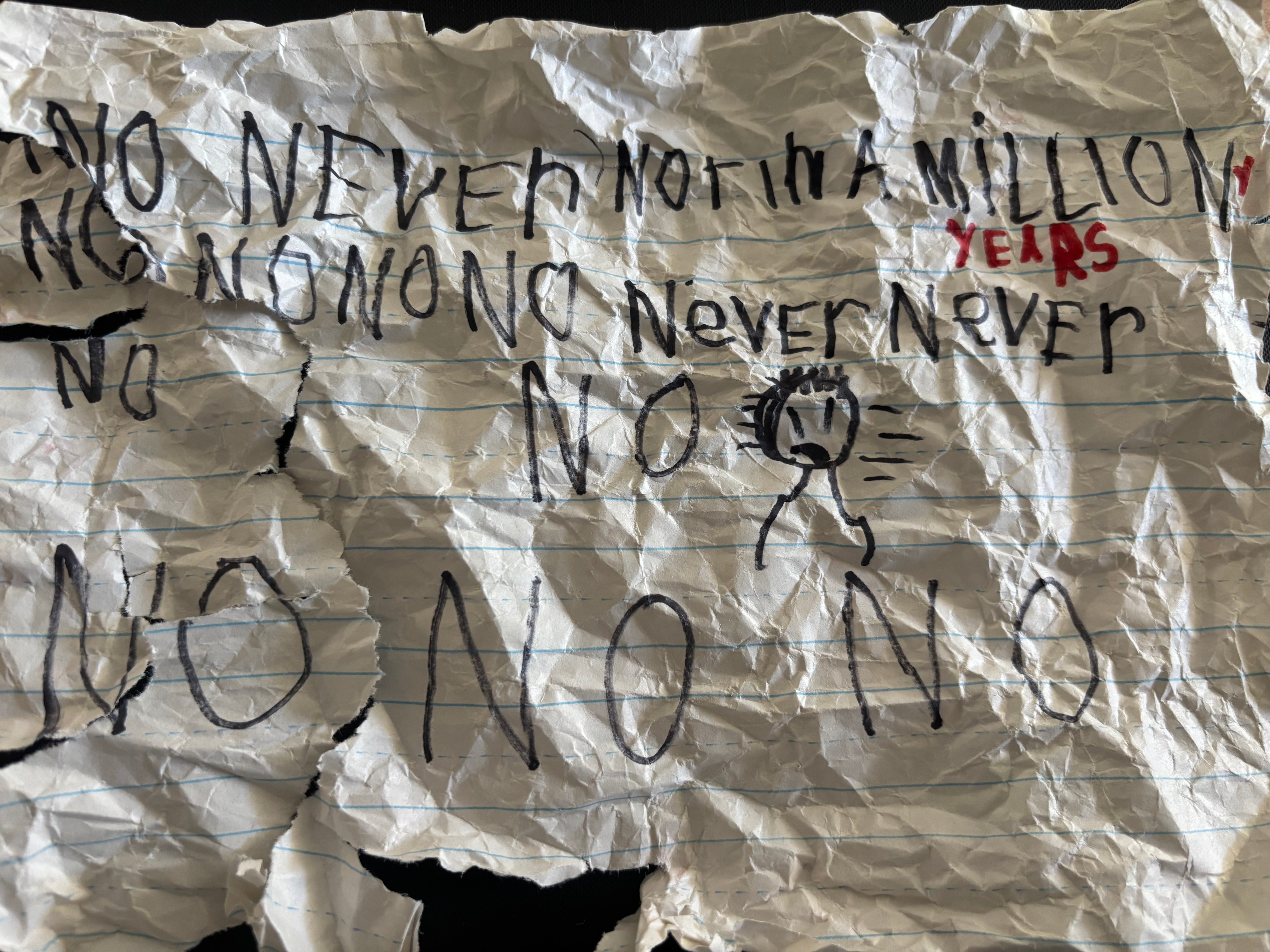
With his three brothers now on board, our last son said he’d pray about it. (:
I’m excited to see what happens. As my stake president, Shaun Peck, often says, “let’s see what God has in store.”