


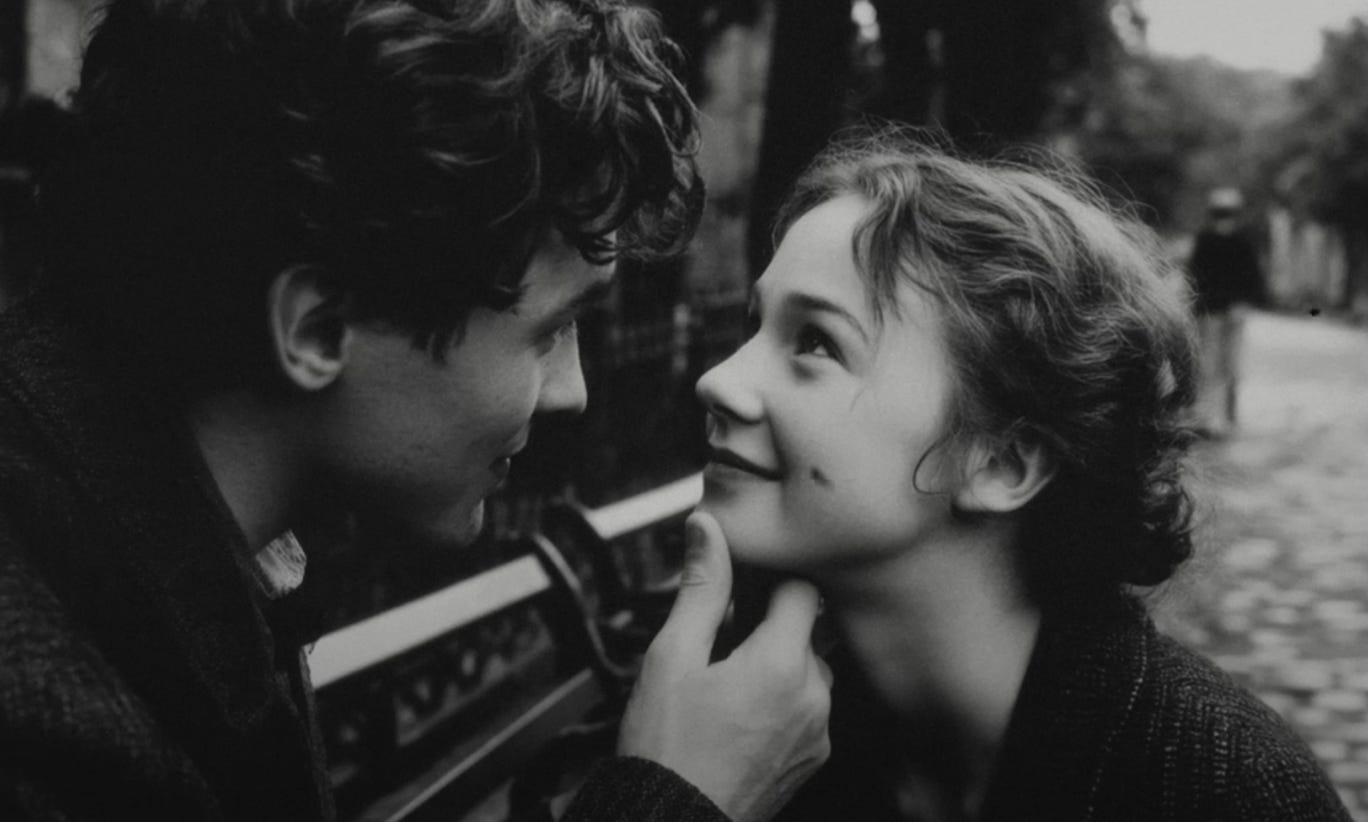
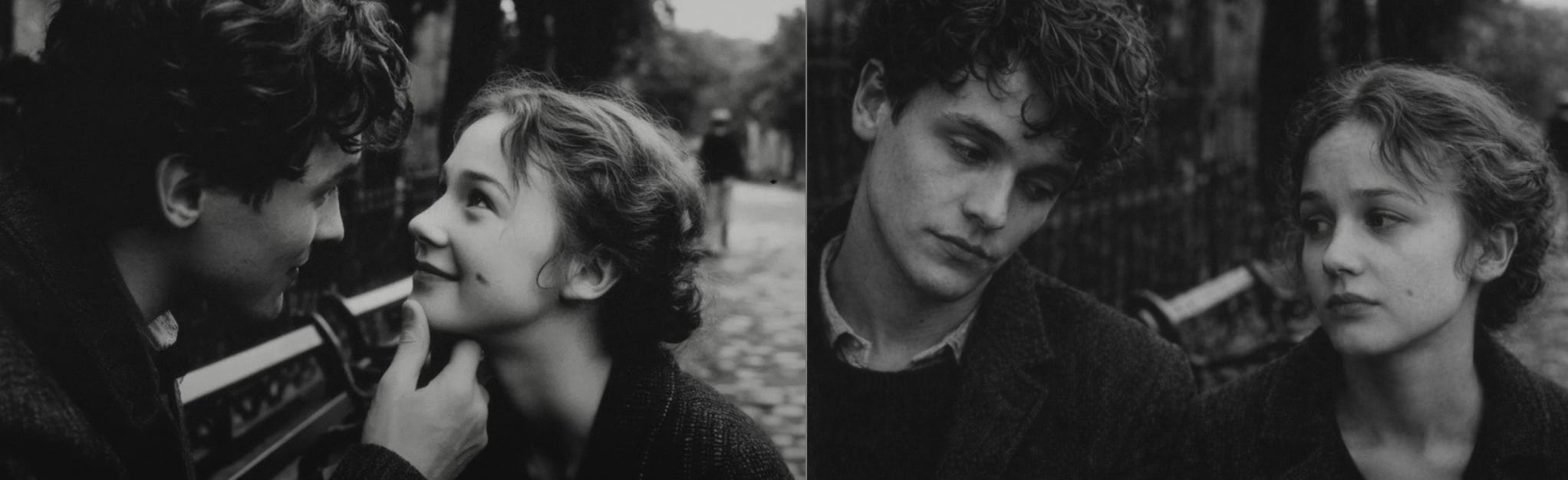
Do you have an early memory of young, sweet attraction that was reciprocated? Many do, although not everyone. If you do, you know the exhilaration and purity of that moment.
In a secularizing, sexualizing society where romance is increasingly equated with physical hunger and bodily lust, this—I think—is so important to remember: Romance in its simplest and truest form is pure and sweet….the kind that captures minds and hearts in middle/high school—illustrated by the lovely story of Drake and Ann Maye’s sweet romance that I wrote about for Deseret News this week.
Then there’s the 80-something couple sitting on the back row at Church that can’t stop talking about how much they love each other. We’ve all seen these cute couples as well—at every age of life.

Photo by Esther Ann on Unsplash (the photographer’s parents, taken Christmas 2017)
In between those sweet moments—somewhere along the line—beautiful romance can be undermined, subverted, gutted and killed. But, how?
That’s the question I’ve been pondering for twenty years now, ever since interviewing people for my first book in 2013, “Once upon a time, he wasn’t feeling it anymore.” I heard stories over and over about rapidly evaporating sweetness:
“Initially, I felt a crush and attracted … but there would come a point where I just felt nothing anymore; I just had no affection for the person. They were just like anyone else.”
“After two to three months, my heart would start to dry up toward that person. I would let her down as gently as I could.”
“My affection would die over time after the initial excitement of dating someone wore off. I have suddenly changed a number of times.”
“I broke up with a wonderful girl three times because the bubbling feeling had faded.”
“We date, things are great, we’re happy, good to go—then it just drops off.”
“It was always super exciting and butterflies and fireworks—and always around six months, he would lose interest. And I would get clingy and try to convince him to stay.”
Notice that none of these are a long-term process. Each happens with stunning rapidity—so much so, the couple also seems disoriented and surprised.
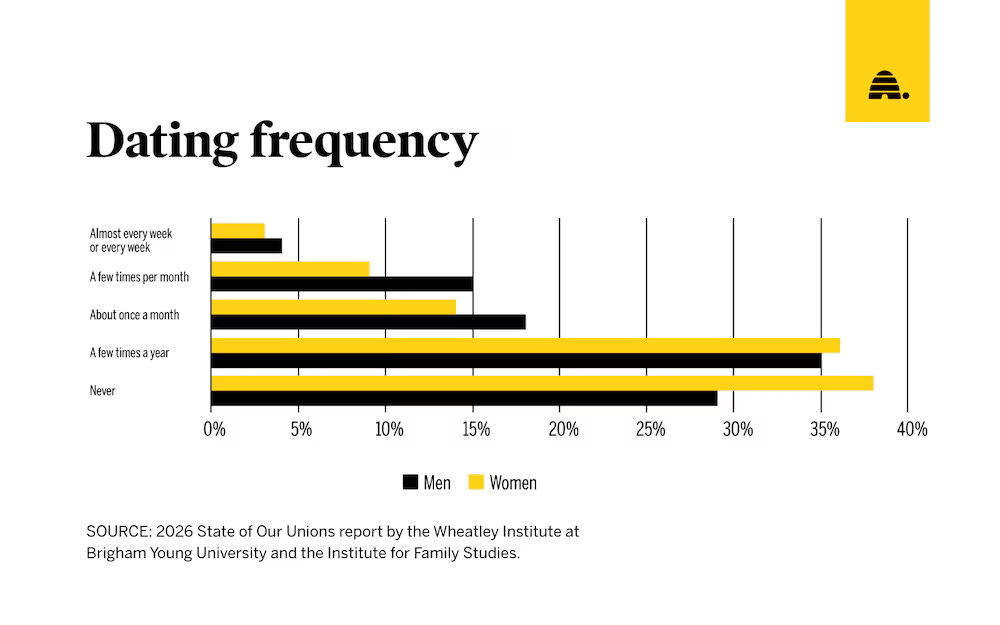
No wonder so many people are turned off from dating, with only 30% of young people expressing interest, according to research we reported this week at Deseret News.
A similar confusion happens to married couples who knelt across the altar from each other, genuinely excited and drawn to each other …. only to feel deeply estranged within a matter of years or even months.
But, once again, why?
An impossible story of romance
In my book, I proposed that many young (and old) people were embracing a story about romance that was effectively killing the very love they cared so much about…by overloading the relationship with inhuman, otherworldly expectations and demands.
As philosopher Simon May at King’s College in London puts it: “We expect love to be a ... journey for the soul, a final source of meaning and freedom ... a key to the problem of identity, a solace in the face of rootlessness ... a redemption from suffering, and a promise of eternity. Or all of these at once. In short: love is being overloaded.”
By requiring love to reflect “superhuman qualities,” May continues, we force relationships to “labor under intolerable expectations,” ultimately “demanding from the loved one far more than they can possibly be.”
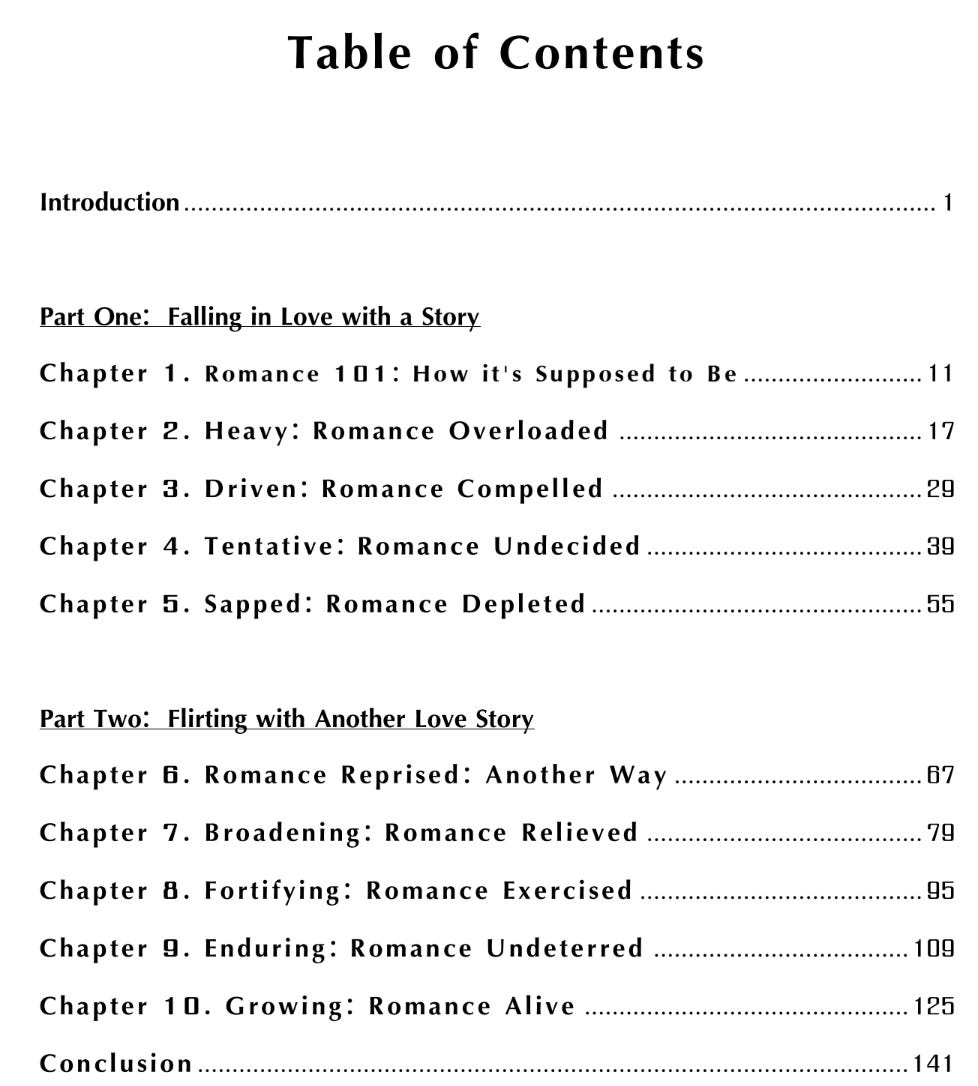
By the way, although it’s a bit dated, you’re welcome to download a copy of this book’s PDF for free here:

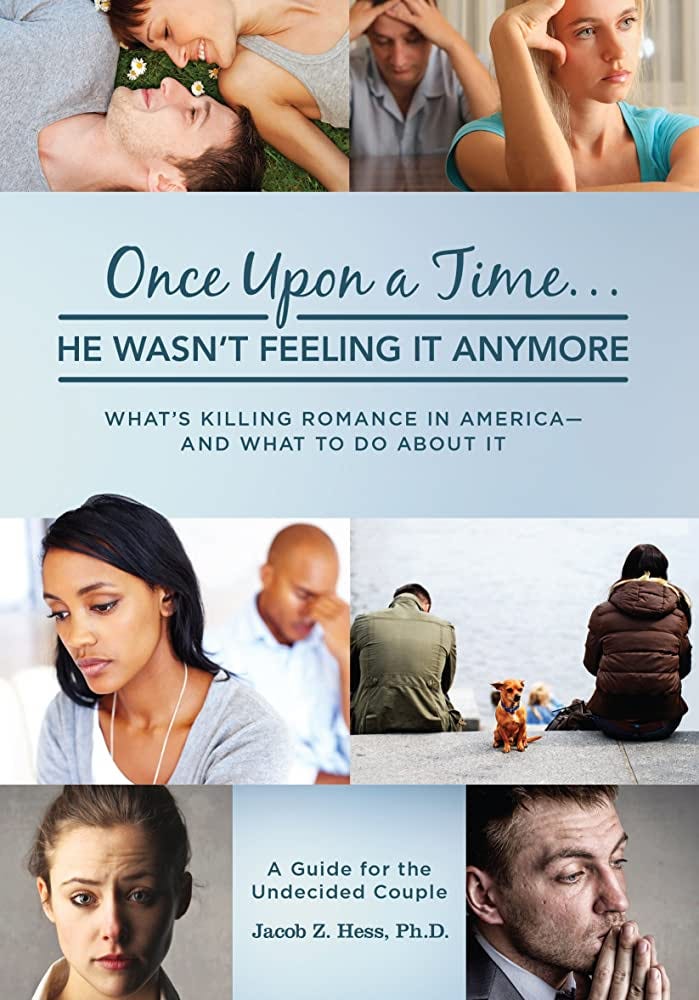
(A condensed version of the book’s themes is also available here: ”What’s Hijacking So Many Beautiful Relationships?”)
Once again, it’s not just dating relationships that are getting overloaded. Historian Stephanie Coontz likewise describes “unprecedented goals for marriage”—saying, “Never before in history had societies thought that such a set of high expectations about marriage was either realistic or desirable.”
In addition to expecting otherworldly emotion, many couples sincerely believe this feeling should always be there. As one writer says, that “if human love ever wanes, then it wasn’t love in the first place.” In one study of romantic beliefs, 65% of people reported believing that “the intense passion of the first stages, if it is real, will last, or it should last, forever.”
A more honest and healthy story of romance
The truth, as emphasized by renowned author M. Scott Peck, is that “No matter whom we fall in love with, we sooner or later fall out of love if the relationship continues long enough. This is not to say that we invariably cease loving the person with whom we fell in love. But it is to say that the feeling of ecstatic lovingness that characterizes the experience of falling in love always passes.”
Listen to that carefully: “Always passes.” That’s true for Brad and Angelina. And for you, too. There are many influences on ebbing romantic feelings, ranging from stress and trauma, to medications and health conditions.
The real question is what you’re going to do next. For starters, don’t panic. A moment of feeling less romantic excitement can be uniquely challenging—even terrifying—for both dating and married couples today.
So, if that happens for you, and you’re “not feeling it anymore,” hold on.
The good news is you don’t have to approach evolutions in romantic attachment as a crisis or tragedy. Instead, try approaching a softening of feelings as another opportunity to show love. That’s exactly what Dr. Scott Peck suggests: “It is when a couple falls out of love [that] they may begin to really love. ... True love happens after the love starts to fade.”
Inspired by Jay Leno
Jay Leno’s the kind of guy that has the money and status to do whatever he wants. But when his wife of 45 years got dementia, he said, “I like taking care of her. I enjoy her company, and we have a good time... That’s really what love is. That’s what you do,”
“When you get married, you sort of take a vow: ‘Will I live up to this?” he said in an interview.
I’m inspired by Leno—just as I was watching my father and grandfather take care of their sweethearts amidst cancer and strokes, with even more tenderness. We need these examples of true love, as my friend Alan Hawkins reminded people in his lovely article, “Let your marital light shine: A call to cute old married couples everywhere”

Lovely image by my colleague Michelle Budge at Deseret News
Needing something more?
Although we all need good examples and better narratives, I’m persuaded we all need something more. That alone won’t be enough to lift people out of deep woundedness and heartache.
There’s something deeper needed, as reflected in this lovely Casting Crowns video:
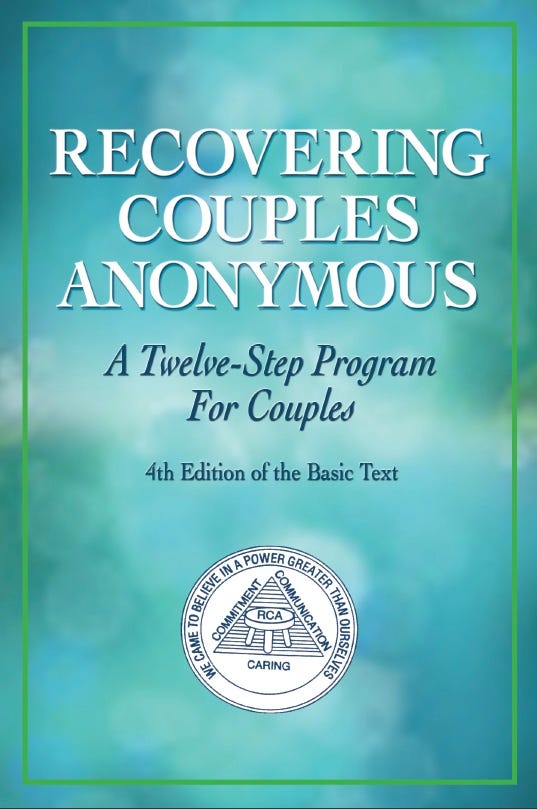
Many couples have found, as reflected in the group Recovery Couples Anonymous, that without a higher power interceding in their relationship, they can’t be delivered from the bondage they are experiencing together.
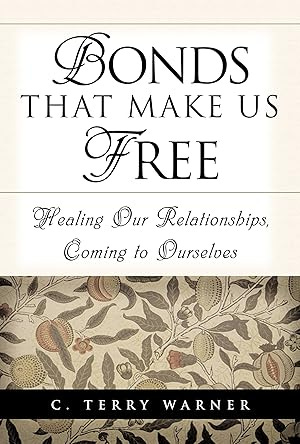
Terry Warner’s clear and effective description of “collusion” between couples, and guidance on how to shift out of resentment and a “heart at war” towards a “heart at peace” is also incredibly helpful, outlined in “Bonds That Make Us Free: Healing Our Relationship, Coming to Ourselves”:
Ten questions to honestly ask yourself
The sad reality is that many beautiful couples with enormous possibilities for future happiness are being sideswiped—overwhelmed by the belief (and demand) that they’re supposed to feel more right now. If that describes you, it’s crucial to ask yourself some questions:
Have you ever felt your own marriage or dating relationships weighed down by these kinds of heavy expectations?
Where did you learn what romance is supposed to feel like?
Do you believe that if passion fades, something must be wrong?
Have you ever expected one person to meet needs that used to be met by community, faith, or family?
What story of romance are you living inside? And is that story helping your love grow — or hollowing it out?
How do you think that relationships could be different if those expectations and demands were lifted?
Have you ever—now or in the past—experienced a shift in your own feelings of attraction or romantic excitement toward someone you love? If so, were you able to approach that with wisdom and patience—or were you tempted to do something more drastic and dire?
Are you prepared for the fact that even the best love stories will include seasons of quiet?
What if real romance isn’t found in constant intensity, but in chosen devotion? When the fireworks fade, will you run—or will you build?
What if the sweetness of early romance isn’t meant to be sustained at the same pitch—but deepened into something quieter, steadier, and more resilient?
Above all, stay hopeful in the possibility of sweet love returning powerfully
Each Valentine’s Day, we have a tradition of showing our boys a movie that captures beautiful and healthy romance (prompted by those years when they were “disgusted by girls!”)
This year, we read the scriptural description of “true love” or charity that “suffereth long, and is kind; charity envieth not; charity vaunteth not itself, is not puffed up, Doth not behave itself unseemly, seeketh not her own, is not easily provoked, thinketh no evil; Rejoiceth not in iniquity, but rejoiceth in the truth; Beareth all things, believeth all things, hopeth all things, endureth all things.”
Then, we showed them this older movie with Katherine Heigl, “Love Comes Softly,” (available for free below), still one of the most beautiful depictions of true love that grows over time:
I’d also recommend, “The Painted Veil” as an illustration of a marriage healing from a wound of deep betrayal (be ready for a brief scene at the beginning that’s illustrating the false excitement of the wife’s early betrayal). Such a beautiful movie!
Bottom line: Don’t let prevailing, popular, seductive narratives of love and romance set the terms for your relationship. Unless there is genuine abuse taking place, don’t allow them to push you around and bully you into giving up.
Stay hopeful for miracles that can still happen, and reach for people who can help you find that, including the Living God who’s surely rooting for you too more than anyone else.
I really enjoyed Love Comes Softly. I wish there were more men as respectful as that one.
I believe an important lesson of The Painted Veil would be, "Leave when he threatens to strangle you."
Of course there is always hope, in Jesus Christ. But married people, especially married LDS people, are often so clueless about the war zone in which single people in the 21st century do battle. 🤦